Peter Obi Biography: Age, Political Career & Net Worth
Explore the full biography of Peter Gregory Obi — Nigerian politician, businessman, and 2023 Labour Party presidential candidate. Age, career, family, and net worth covered.
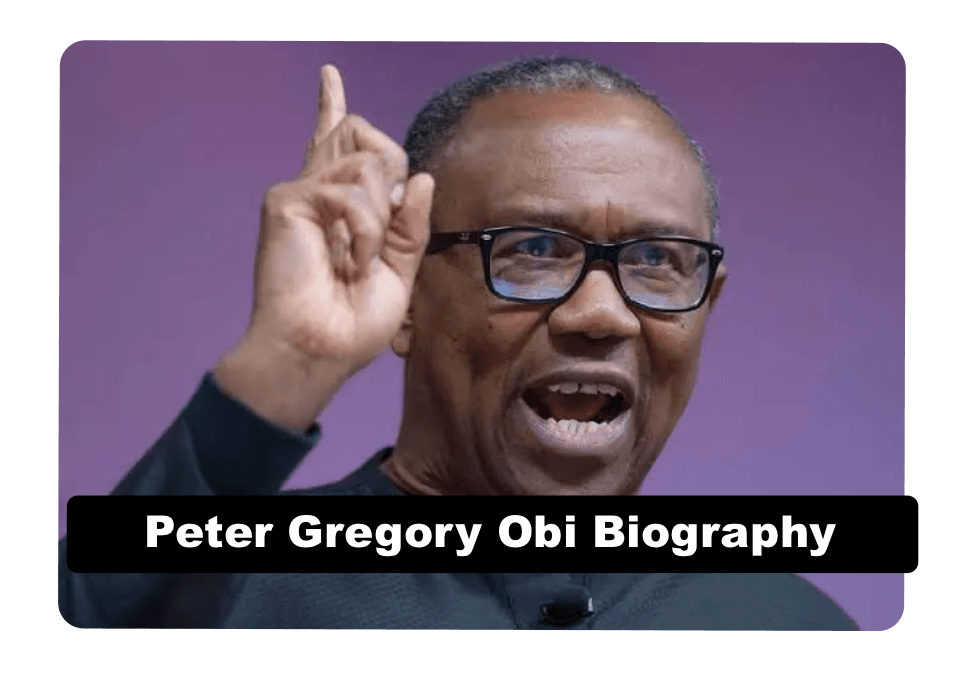
Peter Gregory Obi is one of Nigeria’s most talked-about political figures. Born on July 19, 1961, in Onitsha, Anambra State, he built a formidable reputation as a businessman before transitioning into politics, where he served as Governor of Anambra State across three separate tenures from 2006 to 2014. Nicknamed “Okwute” — an Igbo word meaning “Rock” — Obi has become a symbol of fiscal discipline, integrity, and youth-driven political change in Nigeria.
His national profile peaked when he ran as the Labour Party’s presidential candidate in the 2023 Nigerian general election, galvanising millions of young Nigerians under the banner of the “Obidient” movement. Whether celebrated or criticised, Peter Obi remains one of the most influential voices in contemporary Nigerian politics.
Quick Facts About Peter Gregory Obi
| Detail | Information |
|---|---|
| Full Name | Peter Gregory Obi |
| Date of Birth | July 19, 1961 |
| Age (as of 2026) | 64 years old |
| Place of Birth | Onitsha, Anambra State, Nigeria |
| State of Origin | Anambra State (Agulu, Anaocha LGA) |
| Nickname | Okwute (meaning “Rock”) |
| Profession | Politician, Businessman |
| Political Party | Labour Party (LP) |
| Spouse | Margaret Brownson Obi (née Usen) |
| Children | 2 (Gabriella Nwamaka Frances Obi & Gregory Peter Oseloka Obi) |
| Religion | Roman Catholic |
| Estimated Net Worth | $10 million (USD) |
| National Honour | Commander of the Order of the Niger (CON) |
Early Life and Family Background
Peter Obi was born on July 19, 1961, in Onitsha, one of the most commercially active cities in southeastern Nigeria. He is the fourth son of Josphat Obi and Agnes Obi, a devout Catholic family with deep roots in trade and entrepreneurship. His parents ran a popular supermarket in Onitsha, and that early immersion in business shaped his worldview from childhood.
He hails from Agulu in Anaocha Local Government Area of Anambra State. Growing up in Onitsha exposed him to the hustle of commerce, the rhythms of Igbo culture, and the importance of prudent financial management — values that would later define his governance style. His siblings include Bibiana Adani, Ndibe Obi, Fabian Obi, and Martina Obi.
Education
Obi completed his secondary school education at Christ the King College, Onitsha, one of Nigeria’s most prestigious Catholic institutions. He went on to the University of Nigeria, Nsukka, in 1980, graduating in 1984 with a B.A. (Hons) in Philosophy.
Not content to stop there, Obi pursued executive education at some of the world’s top business schools. He completed programmes at Harvard Business School, the London School of Economics, Columbia Business School, the Lagos Business School, the International Institute for Management Development (IMD) in Switzerland, the Kellogg School of Management at Northwestern University, the Saïd Business School at Oxford University, and the Judge Business School at Cambridge University. This academic pedigree gave him a sophisticated understanding of global finance, leadership, and governance.
Business Career
Before politics, Peter Obi built a successful career in business and banking. He started out as a trader, following in his family’s commercial footsteps, before moving into the corporate world. He rose quickly through the ranks and held executive and board-level positions across several prominent Nigerian institutions.
He served as Chairman and Director of companies including Next International Nigeria Ltd, Guardian Express Mortgage Bank Ltd, Guardian Express Bank Plc, Future View Securities Ltd, Paymaster Nigeria Ltd, Chams Nigeria Ltd, Data Corp Ltd, and Card Centre Ltd. Most notably, he became the youngest chairman of Fidelity Bank Plc, a milestone that cemented his reputation as a sharp and capable financial mind. His business success made him a dollar millionaire well before he entered the governorship.
Political Career and Rise to Prominence
Peter Obi’s political journey began in 2003 when he contested for the Anambra State governorship under the All Progressives Grand Alliance (APGA). His opponent, Chris Ngige of the PDP, was declared the winner by INEC. Obi challenged the result in court, and after nearly three years of litigation, the Court of Appeal overturned Ngige’s victory on March 15, 2006. Obi was sworn in as governor on March 17, 2006.
His first tenure was turbulent. On November 2, 2006, the Anambra State House of Assembly impeached him, and his deputy, Virginia Etiaba, was sworn in — making her the first female governor in Nigeria’s history. Obi successfully challenged the impeachment and was reinstated on February 9, 2007 by the Court of Appeal in Enugu. He left office again on May 29, 2007, following elections won by Andy Uba, but took his case to the Supreme Court of Nigeria, which ruled on June 14, 2007 that his four-year tenure had not yet run its course. He was returned to office once more.
Obi was re-elected in the February 2010 gubernatorial election, defeating Professor Charles Soludo, the former CBN Governor. He served a full second term and handed over power to Willie Obiano on March 17, 2014. After the 2015 elections, President Goodluck Jonathan appointed him Chairman of the Nigerian Securities and Exchange Commission (SEC).
The 2019 and 2023 Presidential Runs
In 2018, Obi joined the Peoples Democratic Party (PDP) and was selected as the vice-presidential running mate to Atiku Abubakar for the 2019 presidential election. The ticket lost to incumbent President Muhammadu Buhari and Vice President Yemi Osinbajo.
In 2022, Obi declared his interest in the 2023 presidency, initially under PDP. He defected to the Labour Party in May 2022, citing systemic corruption within PDP. His presidential campaign ignited a massive grassroots movement — the “Obidient” movement — driven largely by Nigerian youth and diaspora. He selected Senator Yusuf Datti Baba-Ahmed as his running mate. Though he lost the February 2023 election to Bola Tinubu, Obi’s candidacy fundamentally shifted the conversation about youth participation, accountability, and third-party politics in Nigeria.
Personal Life
Peter Obi married Margaret Brownson Obi (née Usen) in 1992. They have two children: a daughter, Gabriella Nwamaka Frances Obi, and a son, Gregory Peter Oseloka Obi. Obi is a devout Roman Catholic whose faith visibly informs his ethical approach to leadership and public life. He is known for his modest lifestyle, often seen in simple attire and steering clear of the ostentatious displays common among Nigerian political elites.
Net Worth and Financial Profile
Peter Obi’s estimated net worth stands at approximately $10 million USD, built primarily through his business and banking career before he entered politics. He is widely regarded as one of Nigeria’s most financially disciplined politicians, having left Anambra State with a significantly improved fiscal balance sheet compared to when he took office. He reportedly owns properties in Enugu and London, among other assets.
Awards and Recognition
Peter Obi has received several national and institutional recognitions throughout his career. He was awarded the Commander of the Order of the Niger (CON), one of Nigeria’s national honours. In 2007, he won The Sun Newspaper Man of the Year Award. In 2009, he received the ThisDay Newspaper Most Prudent Governor in Nigeria and the Champion Newspaper Most Trustworthy Governor Award. He also won the West Africa ICT Development Award’s ICT Governor of the Year in 2010 and the Zik Leadership Prize in 2011.
Final Thoughts
Peter Gregory Obi is more than a politician — he is a case study in resilience, intellectual rigour, and the pursuit of principled leadership in a complex political environment. From a trading background in Onitsha to the halls of Harvard and the governorship of Anambra State, his journey speaks to what is possible when preparation meets purpose.
His 2023 presidential campaign may not have produced a victory at the polls, but it produced something arguably more enduring: a generation of politically awakened young Nigerians who believe that governance can be different. Whatever path lies ahead for Peter Obi, his imprint on Nigerian political history is already undeniable.
Frequently Asked Questions
Q1: Who is Peter Gregory Obi?
Peter Gregory Obi is a Nigerian politician and businessman born on July 19, 1961, in Onitsha, Anambra State. He served as Governor of Anambra State from 2006 to 2014 and ran as the Labour Party’s presidential candidate in the 2023 Nigerian general election. He is widely respected for his fiscal discipline and advocacy for good governance.
Q2: What is Peter Obi’s net worth?
Peter Obi’s estimated net worth is approximately $10 million USD, accumulated through his business and banking career prior to entering politics. He held chairman and director roles in several major Nigerian financial institutions, including Fidelity Bank Plc, where he was the youngest chairman.
Q3: Who is Peter Obi’s wife?
Peter Obi is married to Margaret Brownson Obi (née Usen). They wed in 1992 and have two children together — a daughter, Gabriella Nwamaka Frances Obi, and a son, Gregory Peter Oseloka Obi.
Q4: What political party does Peter Obi belong to?
Peter Obi is currently a member of the Labour Party (LP). He previously served under the All Progressives Grand Alliance (APGA) and was a member of the Peoples Democratic Party (PDP) before defecting to the Labour Party in May 2022 to contest the 2023 presidential election.
Q5: What is Peter Obi’s nickname and what does it mean?
Peter Obi is nicknamed “Okwute,” an Igbo word meaning “Rock.” The nickname reflects his reputation for steadfastness, resilience, and unwavering commitment to his principles throughout his career in business and politics.
Q6: How many times did Peter Obi serve as governor?
Peter Obi served as Governor of Anambra State three separate times — from March to November 2006, from February to May 2007, and from June 2007 to March 2014. His tenures were shaped by legal battles, impeachment, and eventual Supreme Court vindication.
Q7: What was the “Obidient” movement?
The “Obidient” movement was a grassroots political movement that emerged during Peter Obi’s 2023 presidential campaign under the Labour Party. It was driven largely by Nigerian youth and diaspora voters who rallied behind Obi’s message of accountability, transparency, and economic reform, making it one of the most significant third-party political movements in Nigeria’s history.