Swami Vivekananda Biography: Age, Teachings & Legacy
Full biography of Swami Vivekananda — Indian monk, philosopher, and spiritual icon. Learn his real name, teachings, Chicago speech, and lasting global legacy.
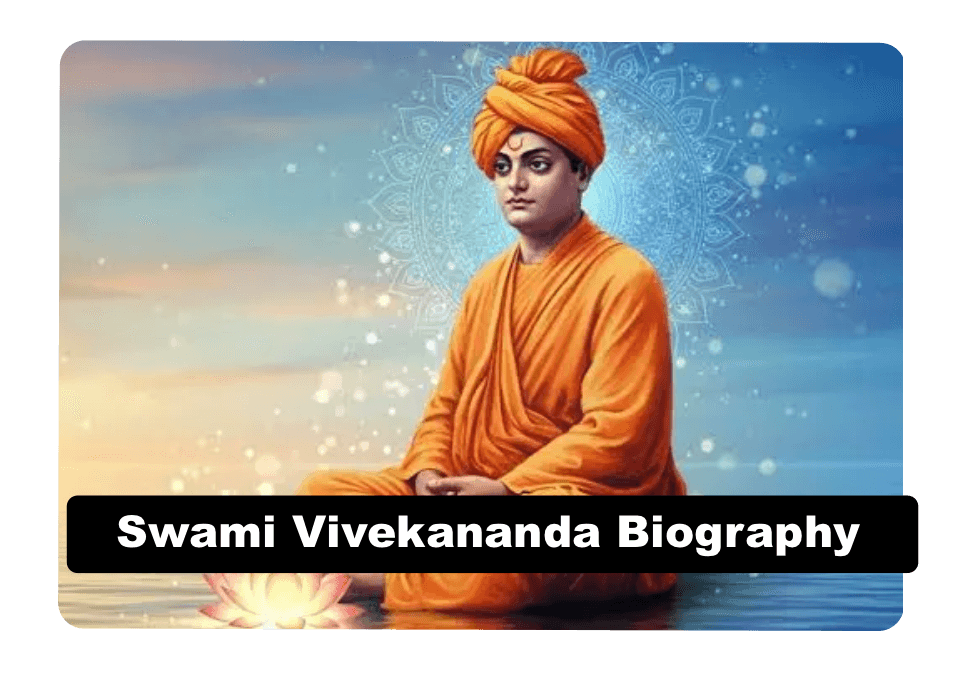
Swami Vivekananda stands as one of the most towering spiritual figures in modern history. Born Narendranath Datta on January 12, 1863, in Calcutta, he became the chief disciple of the mystic Ramakrishna and went on to introduce Vedanta and Yoga to the Western world. His electrifying speech at the 1893 Parliament of World’s Religions in Chicago remains one of the most celebrated addresses in religious history.
In a life that lasted only 39 years, Vivekananda reshaped how the world understood Hinduism, spirituality, and Indian philosophy. He founded the Ramakrishna Math and Ramakrishna Mission, championed the poor and oppressed, and left behind writings and teachings that continue to inspire millions across the globe.
Quick Facts About Swami Vivekananda
| Detail | Information |
|---|---|
| Full Birth Name | Narendranath Datta |
| Born | January 12, 1863, Calcutta (now Kolkata), India |
| Died | July 4, 1902, Belur Math, West Bengal |
| Age at Death | 39 years old |
| Profession | Hindu Monk, Philosopher, Author, Spiritual Teacher |
| Guru | Sri Ramakrishna Paramahamsa |
| Key Organisation | Ramakrishna Math & Ramakrishna Mission (founded 1897) |
| Debut Book | Raja Yoga (1896) |
| Famous For | 1893 Chicago Parliament of World’s Religions speech |
| National Honour | Birthday celebrated as National Youth Day in India (since 1985) |
Early Life and Family Background
Narendranath Datta was born on January 12, 1863, during the Makar Sankranti festival, at his ancestral home at 3 Gourmohan Mukherjee Street in Calcutta. He was one of nine siblings in a Bengali Kayastha family of considerable social standing. His father, Vishwanath Datta, was a successful attorney at the Calcutta High Court — a rational, progressive thinker with wide-ranging intellectual interests.
His mother, Bhuvaneshwari Devi, was a devout and deeply spiritual woman who taught young Narendra stories from the Ramayana and Mahabharata from an early age. The contrast between his father’s rationalism and his mother’s piety shaped a uniquely balanced worldview in the boy. From childhood, he showed signs of both restless curiosity and deep spiritual inclination — meditating before images of Shiva, Rama, and Hanuman even as a small child.
His grandfather, Durgacharan Datta, had been a Persian and Sanskrit scholar who renounced family life at age 25 to become a monk — a detail that would later seem eerily prophetic of Narendra’s own path.
Education
Vivekananda enrolled at the Metropolitan Institution of Ishwar Chandra Vidyasagar at age eight. After his family briefly relocated to Raipur, he returned to Calcutta and in 1879 became the only student to score first-division marks in the Presidency College entrance examination — a remarkable academic feat.
He went on to study at the General Assembly’s Institution, now known as Scottish Church College, where he immersed himself in Western logic, European history, and philosophy. He was particularly captivated by Herbert Spencer’s theory of evolution and even translated Spencer’s book Education into Bengali. He also studied Bengali literature and Sanskrit scriptures alongside Western philosophical texts, building the cross-cultural intellectual foundation that would later define his global ministry.
Meeting Ramakrishna and Spiritual Awakening
The turning point in Vivekananda’s life came when he met Sri Ramakrishna Paramahamsa at the Dakshineswar Kali Temple around 1881. The young, questioning Narendra asked Ramakrishna the same question he had posed to every spiritual leader he encountered: “Have you seen God?” Ramakrishna answered without hesitation — a directness that stunned the sceptical young man.
Initially dismissive of Ramakrishna’s simple ways, Narendra was gradually won over by his teacher’s extraordinary patience, love, and spiritual depth. He began visiting Dakshineswar regularly, and over time, Ramakrishna recognised him as his spiritual successor. When Ramakrishna died of throat cancer on August 16, 1886, he had already entrusted the mission of his teachings to Narendra.
Following his guru’s death, Vivekananda took formal monastic vows, renounced all worldly ties, and spent years wandering across the Indian subcontinent as an ascetic. He travelled on foot, witnessing the poverty, inequality, and suffering of ordinary Indians under British colonial rule — experiences that deepened his commitment to combining spiritual awakening with social service.
The 1893 Chicago Speech and Global Mission
In 1893, Vivekananda represented Hinduism at the Parliament of World’s Religions in Chicago. His opening words — “Sisters and Brothers of America” — drew thunderous applause from an audience of thousands. The New York Herald called him “undoubtedly the greatest figure in the Parliament of Religions.” The speech introduced Hinduism and India’s spiritual heritage to the Western world with authority, warmth, and universal vision.
He spent the next two and a half years in the United States, founding the Vedanta Society of New York in 1894 — the first of its kind in the West. He later visited the United Kingdom, where he met the Indologist Max Müller and initiated Margaret Elizabeth Noble as his disciple, Sister Nivedita. In Germany, he met philosopher Paul Deussen. He was offered academic positions at both Harvard and Columbia universities, but declined, staying true to his monastic calling.
His major published works from this period include Raja Yoga (1896), Karma Yoga (1896), and Lectures from Colombo to Almora (1897) — texts that remain widely studied and revered to this day.
Founding of Ramakrishna Math and Mission
Returning to India in 1897, Vivekananda founded the Ramakrishna Math and Ramakrishna Mission on May 1, 1897. These twin institutions were built on the twin pillars of spiritual development and social service — education, relief work, women’s upliftment, and the eradication of caste discrimination. His rallying cry — “Arise, awake, and stop not till the goal is reached” — became a defining slogan of India’s emerging nationalist consciousness.
Today, the Ramakrishna Math and Mission operate over 200 centres globally, present in more than 20 countries outside India. The Belur Math in Howrah remains their international headquarters.
Philosophy and Core Teachings
Vivekananda’s philosophy was rooted in Advaita Vedanta — the non-dualistic school that asserts the oneness of all existence. He taught that every human being is inherently divine, and that the purpose of life is to realise that divinity through service, devotion, knowledge, or meditation. He introduced his famous four yogas model — Karma Yoga, Bhakti Yoga, Jnana Yoga, and Raja Yoga — as practical pathways to self-realisation suited to different temperaments.
He believed deeply in the harmony of all religions, teaching that diverse faiths are simply different paths to the same divine truth. His interpretation of Hinduism as a rational, universal, and inclusive philosophy helped elevate it to recognised status among the world’s great religions. Netaji Subhas Chandra Bose said of him: “Swamiji harmonized the East and the West, religion and science, past and present. That is why he is great.”
Personal Life
Vivekananda remained celibate throughout his life, fully committed to monastic vows and the pursuit of spiritual truth. He never married. His personal relationships were characterised by warmth, depth, and an extraordinary ability to form sincere bonds with people from all walks of life — whether Indian villagers or Western intellectuals. His health suffered considerably from years of intense work and travel. He battled asthma, diabetes, and kidney disease, yet continued lecturing and teaching until his final days.
Death and Mahasamadhi
Swami Vivekananda had reportedly predicted that he would not live past the age of forty. On July 4, 1902, he taught Sanskrit grammar to students at Belur Math through the morning. That evening, he retired to his room and passed away during meditation at around 9 p.m. His disciples believed he attained Mahasamadhi — a conscious, meditative departure from the body. He was 39 years old. He was cremated on the banks of the Ganges, near the site where his guru Ramakrishna had been cremated sixteen years earlier.
Legacy and Lasting Impact
Swami Vivekananda’s influence on India and the world is immeasurable. His birthday, January 12, has been observed as National Youth Day in India since 1985, in recognition of his enduring relevance to young people. He is credited with laying the groundwork for the global spread of yoga and meditation, inspiring the Indian independence movement, and giving Indians a renewed sense of cultural identity and self-respect under colonial rule.
His complete works span ten volumes and are studied in universities, monasteries, and meditation centres worldwide. He remains one of the most-quoted spiritual figures of the modern era, and his vision of a humanity united by shared divinity continues to resonate across religions and generations.
Final Thoughts
In just 39 years, Swami Vivekananda accomplished what most cannot achieve in a full lifetime. He bridged continents, challenged prejudice, and offered humanity a vision of spirituality grounded in dignity, service, and universal love. His words still reach across time, calling each new generation to rise, awaken, and act.
The world continues to find in Vivekananda not just a saint or a philosopher, but a mirror — reflecting back the highest potential of the human spirit. His life was brief, but his light has never dimmed.
Frequently Asked Questions
Q1: Who was Swami Vivekananda?
Swami Vivekananda, born Narendranath Datta, was an Indian Hindu monk, philosopher, and the chief disciple of Sri Ramakrishna Paramahamsa. He is credited with introducing Vedanta and Yoga to the Western world. His iconic speech at the 1893 Parliament of World’s Religions in Chicago brought him global recognition.
Q2: What was Swami Vivekananda’s real name?
His birth name was Narendranath Datta. He was born on January 12, 1863, in Calcutta (now Kolkata), India. He adopted the name Swami Vivekananda after taking his formal monastic vows.
Q3: How did Swami Vivekananda die?
Swami Vivekananda passed away on July 4, 1902, at Belur Math in West Bengal, aged 39. He died during evening meditation, and his disciples believe he attained Mahasamadhi — a conscious departure from the body. He had reportedly predicted he would not live past 40.
Q4: What did Swami Vivekananda teach?
He taught a practical form of Vedanta philosophy, emphasising the divinity of every human being, the harmony of all religions, and selfless service as the highest form of worship. His four yogas — Karma, Bhakti, Jnana, and Raja — offered practical spiritual paths for people of different temperaments.
Q5: What is Swami Vivekananda famous for?
He is most famous for his address at the 1893 Parliament of World’s Religions in Chicago, where he introduced Hinduism to the West. He also founded the Ramakrishna Math and Ramakrishna Mission, and authored foundational texts including Raja Yoga and Karma Yoga.
Q6: What is the Ramakrishna Mission?
The Ramakrishna Mission is a humanitarian and spiritual organisation founded by Vivekananda in 1897. It operates over 200 centres across more than 20 countries, providing education, disaster relief, healthcare, and spiritual guidance. Its headquarters, Belur Math, is located in Howrah, West Bengal.
Q7: Why is January 12 celebrated as National Youth Day in India?
January 12 is Swami Vivekananda’s birthday and has been celebrated as National Youth Day in India since 1985. The Indian government designated the day to honour his message of self-reliance, courage, and service — qualities considered especially relevant to the nation’s youth.