Rajat Sharma Biography: Age, India TV & Net Worth 2026
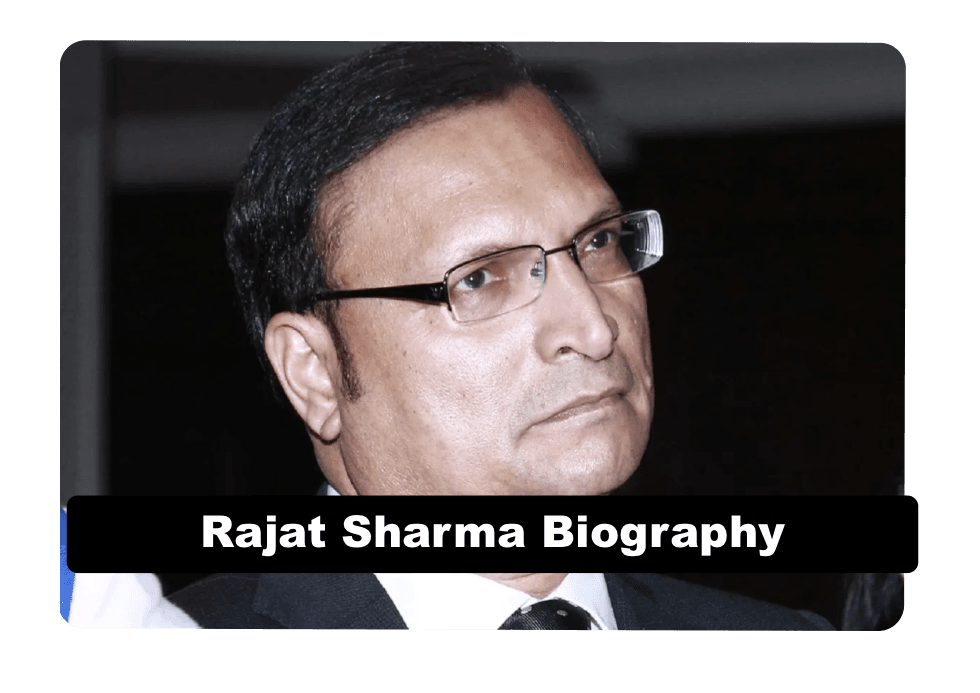
Rajat Sharma is an Indian journalist born February 18, 1957. Chairman of India TV, host of Aap Ki Adalat. Net worth ₹110 crore. Read his biography.
Rajat Sharma stands as one of India’s most influential journalists and media entrepreneurs. Born on February 18, 1957, in Delhi, he is the Chairman and Editor-in-Chief of India TV, one of India’s leading Hindi news channels. His iconic television show Aap Ki Adalat has been running since 1993, making it the longest-running reality show in Indian television history. At 69 years old, Sharma continues to shape public discourse through fearless journalism and incisive interviews. He has questioned over 750 prominent personalities, from prime ministers to Bollywood superstars. In 2015, he received the Padma Bhushan, India’s third-highest civilian honor, recognizing his contributions to journalism. His journey from poverty to becoming a media mogul inspires aspiring journalists across the nation.
Quick Facts About Rajat Sharma
| Detail | Information |
|---|---|
| Full Name | Rajat Sharma |
| Date of Birth | February 18, 1957 |
| Age | 69 years (as of 2026) |
| Birthplace | Sabzi Mandi, Delhi, India |
| Profession | Journalist, Media Entrepreneur |
| Net Worth | ₹110 Crore (approx.) |
| Spouse | Ritu Dhawan |
| Education | M.Com, Shri Ram College of Commerce |
| Famous For | Aap Ki Adalat, India TV |
| Awards | Padma Bhushan (2015) |
Humble Beginnings in Old Delhi
Rajat Sharma was born in Sabzi Mandi, a bustling wholesale vegetable market area in Old Delhi. He grew up in extreme poverty, sharing a cramped 100-square-foot room with his parents, six brothers, and one sister. The tiny space had no electricity or running water. The family bathed under a municipal tap nearby, with the children carrying water home in buckets. Despite these hardships, Sharma’s parents emphasized education. He attended Sanatan Dharm Middle School in Subzi Mandi from 1963 to 1971. Later, he shifted to Ramjas School on Pusa Road, completing his schooling in 1974. The financial struggles never dimmed his academic ambitions. Instead, they fueled his determination to succeed. During his teenage years, Sharma became politically active. He joined the movement led by Jayaprakash Narayan, a prominent social activist opposing the authoritarian policies of Prime Minister Indira Gandhi. He contributed to a small newspaper called ‘Mashaal,’ learning the basics of journalism and activism.
Emergency Arrest and Tihar Jail
When Indira Gandhi declared the Emergency in June 1975, civil liberties were suspended across India. Thousands of political activists, journalists, and students were arrested without trial. Rajat Sharma, then only 18 years old, was among those imprisoned for his involvement with the JP Movement. He spent 11 months in Tihar Jail, one of Asia’s largest prison complexes. This experience profoundly shaped his worldview and commitment to democratic values. He witnessed firsthand the importance of press freedom and the dangers of authoritarian rule. The Emergency ended in March 1977, and Sharma was released. The experience deepened his resolve to pursue journalism as a tool for accountability.
College Years and Political Connections
After his release, Sharma enrolled at Shri Ram College of Commerce (SRCC), one of Delhi University’s most prestigious institutions. While paying his college fees one day, a senior student offered him assistance. That senior was Arun Jaitley, who would later become India’s Finance Minister and a key figure in the Bharatiya Janata Party (BJP). This chance encounter blossomed into a lifelong friendship. Sharma credits Jaitley with guiding him through many professional challenges. During college, Sharma remained politically active, joining the Akhil Bharatiya Vidyarthi Parishad (ABVP). In 1977, he was elected General Secretary of the Delhi University Students’ Union (DUSU). His friend Vijay Goel, now a BJP Rajya Sabha MP, served as DUSU President. These connections would prove valuable throughout his career.
Early Career in Print Journalism
After completing his Master’s degree in Commerce, Sharma began searching for employment. He secured his first job as a researcher for journalist Janardan Thakur, earning just ₹400 per month. Thakur had recently left Ananda Bazar Patrika to write a syndicated column. While researching for Thakur’s articles, Sharma wrote his first piece for Onlooker, a fortnightly magazine. He was paid ₹300 for the story, nearly matching his monthly salary. Encouraged by this success, Sharma joined Onlooker as a trainee reporter in 1982. His talent quickly became evident. Within two years, he was promoted to Bureau Chief. By 1985, at just 28 years old, he became the magazine’s Editor. This appointment required him to relocate to Mumbai, then called Bombay. Most people in journalistic circles judged him by his age, doubting whether someone so young could handle such responsibility. Sharma proved his critics wrong through hard work and sharp editorial judgment. He later moved to Sunday Observer and then to The Daily, where he worked until 1992. His decade in print journalism established his credibility and honed his investigative skills.
Birth of Aap Ki Adalat
In 1992, during a flight to Delhi, Sharma had a casual conversation with Subhash Chandra, founder of Zee TV, and actor Gulshan Grover. They discussed creating an interview show with a courtroom format. Days later, Chandra called Sharma requesting a detailed brief of this “adalat” concept. The idea was revolutionary for Indian television. In February 1993, the first episode was shot with Lalu Prasad Yadav, then Chief Minister of Bihar, as the guest. The show premiered on March 14, 1993, on Zee TV. The second episode featured writer Khushwant Singh, followed by Election Commissioner T.N. Seshan and cricketer Kapil Dev. The format was unique—guests sat in a witness box while Sharma, as the public prosecutor, questioned them before a studio audience acting as jury. Aap Ki Adalat became an instant sensation. It transformed Sharma from a print editor into a television celebrity. The show’s success lay in Sharma’s ability to ask tough questions respectfully, extracting candid responses from powerful figures. Over three decades, he has interviewed everyone from presidents and prime ministers to Bollywood stars and sports icons.
Launching India TV
In 1995, Sharma launched India’s first private television news bulletin through Independent News Service (INS), the production company he founded with his wife Ritu Dhawan. The bulletin was broadcast across Asia, Europe, and North Africa via satellite. However, Sharma and Dhawan had bigger ambitions. In 2004, they launched India TV, a 24-hour Hindi news channel. They invested heavily in creating an idealist channel with serious journalism. They hired Tarun Tejpal for investigative stories, Maneka Gandhi for animal welfare issues, and Madhu Kishwar for women’s topics. The channel received critical acclaim for its content quality. However, commercial success proved elusive. Within two years, India TV was bleeding money, ranking eighth among news channels. Advertisers avoided the channel due to low ratings. Sharma was forced to sell property and pawn his wife’s jewelry to pay staff salaries. He even received offers for a distress sale of the channel. The choice was stark: shut down or change strategy.
India TV’s Turnaround
Sharma made the difficult decision to shift from idealist journalism to more commercially viable content. He introduced catchy headlines, sensational stories, and programming designed to boost ratings. This strategy worked. By 2008, India TV achieved 120% revenue growth and became profitable. The channel’s distinctive style—bold headlines, fast-paced reporting, and aggressive news coverage—became its trademark. Critics accused the channel of sensationalism, but Sharma defended his approach as necessary for survival. He argued that without financial viability, even the best journalism would die. Under his leadership, India TV grew into one of India’s top-rated Hindi news channels. The broadcast center in Noida features state-of-the-art studios and technology. Today, Sharma hosts Aaj Ki Baat, a prime-time news show that airs weeknights at 9 PM. Millions tune in for his sharp commentary and analysis. The show consistently achieves high television rating points (TRPs), solidifying his position as one of India’s most-watched news anchors.
Marriage and Personal Life
Rajat Sharma married Ritu Dhawan in 1997. Ritu, a seasoned television producer and executive, serves as CEO and Managing Director of India TV. Their partnership extends beyond marriage into successful business collaboration. Ritu conceptualized many aspects of Aap Ki Adalat and handles India TV’s operations while Sharma focuses on content and anchoring. The couple has no publicly known children and maintains privacy regarding their family life. Ritu received the IMPACT Most Influential Woman of the Year award in 2012 for her contributions to the television news industry. Together, they have built a media empire valued at over ₹500 crore. Despite his celebrity status, Sharma maintains a relatively simple lifestyle. He owns luxury vehicles including a Mercedes-Benz S-Class and BMW 7 Series, and resides in Delhi. He stands 5 feet 9 inches tall and maintains good health at 69.
Political Connections and Controversies
Sharma’s close friendship with the late Arun Jaitley and his perceived proximity to Prime Minister Narendra Modi have sparked debates about his editorial independence. Critics argue that India TV shows bias toward the BJP government. An RTI request revealed that Sharma’s Padma Bhushan award was recommended by Jaitley, not through the standard government nomination process. In 2014, a former India TV anchor filed an FIR alleging workplace harassment. Sharma denied the allegations and threatened legal action. In June 2024, Congress leaders Ragini Nayak, Jairam Ramesh, and Pawan Khera accused him of using abusive language during a live broadcast covering election results. Sharma filed a defamation suit, and the Delhi High Court ruled in his favor, ordering removal of the alleged defamatory content. Sharma briefly served as President of the Delhi Cricket Association but resigned after just 20 months, citing corruption and various pressures. In 2023, he successfully defended his brand against “Baap Ki Adalat” and “Jhandiya TV,” which the Delhi High Court deemed deceptively similar to Aap Ki Adalat.
Net Worth and Financial Success
As of 2026, Rajat Sharma’s net worth is estimated at approximately ₹110 crore. His monthly salary is reported to be between ₹25-35 lakh, though as a promoter of India TV, his equity stake significantly enhances his wealth. India TV itself is valued at over ₹500 crore. His income streams include his chairman role at India TV, hosting fees for Aap Ki Adalat and Aaj Ki Baat, speaking engagements at industry summits and political conclaves, and investments in real estate and other ventures. He serves as director in several companies involved in real estate, education, production, and publication. The financial growth reflects not just commercial success but also the immense brand value Sharma has built. His name alone attracts viewership and advertising revenue. Looking ahead, industry analysts project his net worth could exceed ₹400-500 crore by 2030 as India TV expands its digital presence.
Leadership Roles and Recognition
Beyond his work at India TV, Sharma holds several prestigious positions. In July 2024, he was unanimously elected President of the News Broadcasters & Digital Association (NBDA), India’s largest organization of news broadcasters and digital media. He succeeded Avinash Pandey in this role. He also serves as Vice President of Strategic Affairs for the Indian Broadcasting Foundation. These leadership positions reflect his influence in shaping media policies and standards across India. He advocates for ethical journalism and has filed public interest litigation against deepfake technology misuse, having himself been a victim of such manipulation. His awards include the Indian Television Academy Award for Best Anchor – News/Current Affairs, the Entrepreneur of the Year Award in 2009 from Exchange4media, and the Indian Television Academy Lifetime Achievement Award. The Padma Bhushan remains his most prestigious honor.
Legacy and Continuing Influence
Rajat Sharma’s impact on Indian journalism extends beyond ratings and revenue. He democratized Hindi news, giving regional voices prominence in a media landscape dominated by English channels. His courtroom interview format became iconic, inspiring numerous imitators. Aap Ki Adalat has featured historic moments, including the first joint appearance of the three Khan superstars—Salman, Shah Rukh, and Aamir—on national television. His 2014 interview with Narendra Modi before the general elections broke all TRP records for news viewership. President Pranab Mukherjee, who honored Sharma with the Padma Bhushan, urged him to “remain the public prosecutor of the people of India.” Personalities like Swami Ramdev and Shah Rukh Khan have credited Aap Ki Adalat with playing pivotal roles in their rise to fame.
Final Thoughts
Rajat Sharma’s journey from a cramped room in Sabzi Mandi to the pinnacle of Indian journalism exemplifies the power of determination and talent. His 11-month imprisonment during the Emergency instilled values of press freedom and democratic accountability that define his work. At 69, he remains active, relevant, and influential. His success story resonates because it combines personal struggle with professional achievement. He transformed from a researcher earning ₹400 monthly to a media mogul worth ₹110 crore. More importantly, he created platforms that hold the powerful accountable and give ordinary citizens a voice. As media evolves with digital disruption, Sharma continues adapting. His election as NBDA President and advocacy against deepfakes demonstrate forward-thinking leadership. Whether one agrees with his editorial choices or not, his impact on Indian journalism is undeniable and enduring.
Frequently Asked Questions
Q1: Who is Rajat Sharma?
Rajat Sharma is an Indian journalist and media entrepreneur born on February 18, 1957. He is the Chairman and Editor-in-Chief of India TV and host of Aap Ki Adalat, the longest-running television show in India. He received the Padma Bhushan in 2015 for his contributions to journalism.
Q2: What is Rajat Sharma’s age?
Rajat Sharma is 69 years old as of 2026. He was born on February 18, 1957, making him an Aquarius. Despite his age, he remains actively involved in journalism and hosts daily news shows.
Q3: What is Rajat Sharma’s net worth?
Rajat Sharma’s estimated net worth is approximately ₹110 crore as of 2026. His wealth comes from his chairman role at India TV, hosting multiple shows, speaking engagements, and investments. India TV itself is valued at over ₹500 crore.
Q4: Who is Rajat Sharma’s wife?
Rajat Sharma married Ritu Dhawan in 1997. She is a television producer and serves as CEO and Managing Director of India TV. Together, they co-founded the channel and built a successful media empire. The couple has no publicly known children.
Q5: What is Aap Ki Adalat?
Aap Ki Adalat is a courtroom-format interview show hosted by Rajat Sharma that first aired on March 14, 1993. It is India’s longest-running reality show, featuring over 750 prominent guests from politics, entertainment, sports, and other fields answering tough questions.
Q6: When was India TV launched?
India TV was launched in 2004 by Rajat Sharma and his wife Ritu Dhawan. Initially struggling financially, the channel became profitable in 2008 and is now one of India’s leading Hindi news channels with a state-of-the-art broadcast center in Noida.
Q7: Did Rajat Sharma spend time in jail?
Yes, Rajat Sharma was imprisoned in Tihar Jail for 11 months during the Emergency declared by Prime Minister Indira Gandhi in 1975. He was arrested at age 18 for his involvement with the Jayaprakash Narayan movement. This experience shaped his commitment to press freedom.